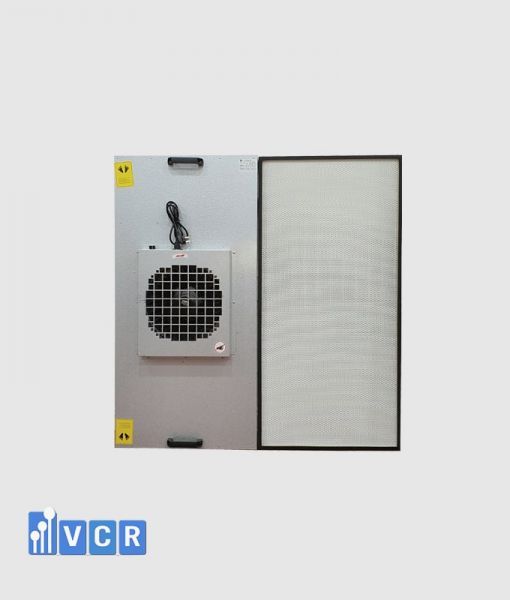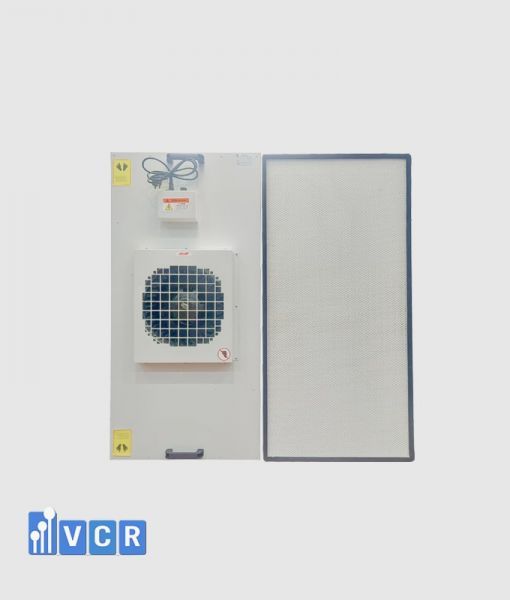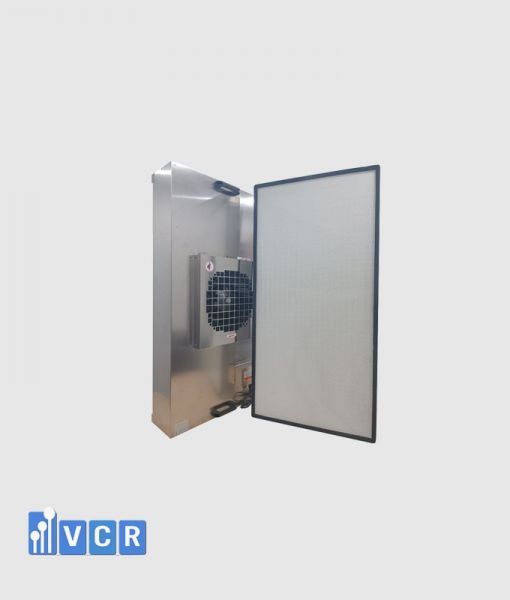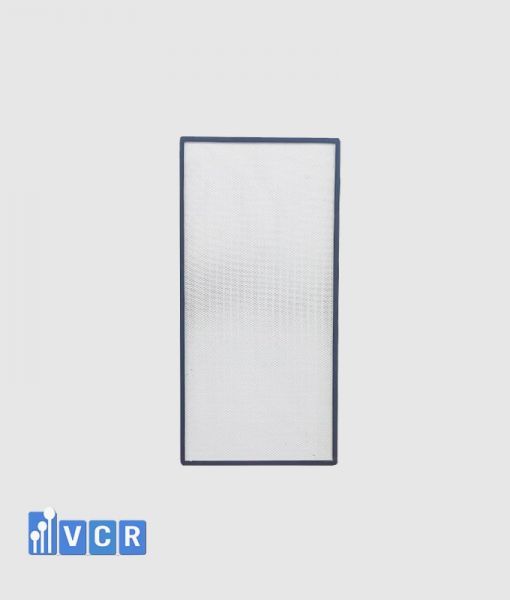


Explore 90 frequently asked questions about FFU – Fan Filter Units, covering construction, operation, selection, motors, HEPA filters, control systems, maintenance, and cleanroom applications.
- General Questions About FFU – Fan Filter Units
- Selecting an FFU for a Cleanroom
- FFU Motors and Control Systems
- HEPA and ULPA Filters in FFUs
- FFU Airflow, Pressure, Velocity, and Noise
- FFU Energy Consumption and Operating Efficiency
- FFU Ceiling-System Design
- Industrial Applications of FFUs
- FFU Operation, Maintenance, and Troubleshooting
- Conclusion
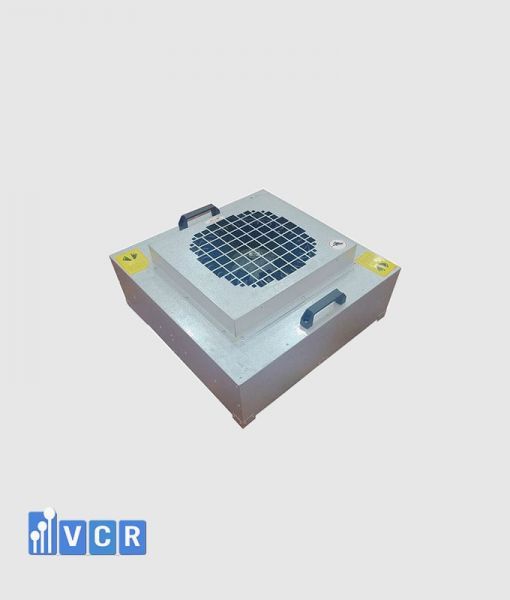
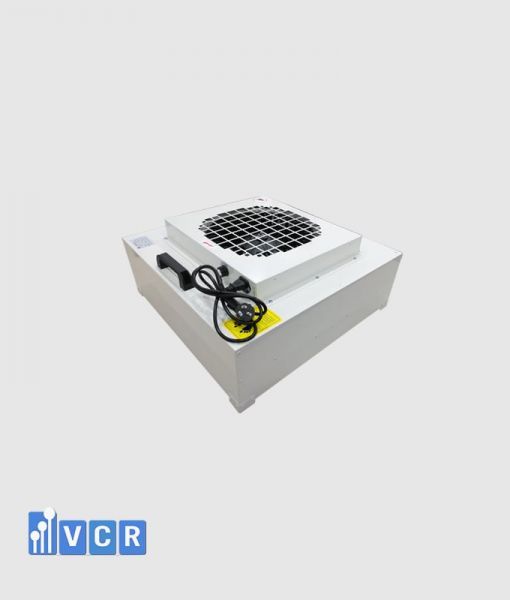
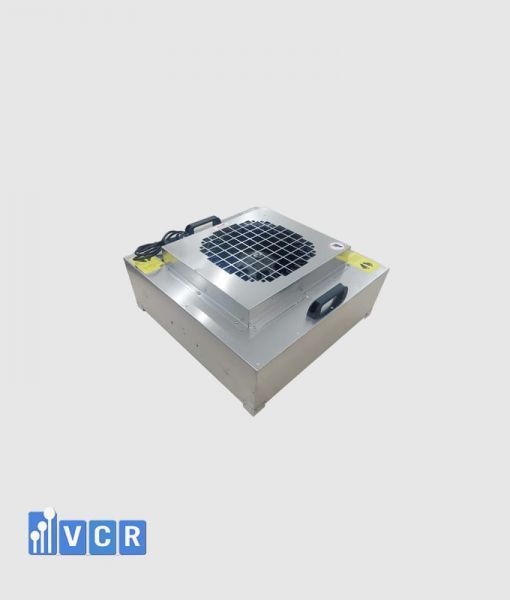
An FFU – Fan Filter Unit is a self-contained air filtration module that integrates a fan, motor, and HEPA or ULPA filter. It is commonly installed in cleanroom ceilings to draw air from the ceiling plenum, remove airborne particles, and deliver clean air directly into the controlled area.
The following frequently asked questions provide practical information about FFU operating principles, technical specifications, selection, installation, control, maintenance, and industrial applications.
General Questions About FFU – Fan Filter Units
What is an FFU – Fan Filter Unit?
An FFU – Fan Filter Unit is a modular air filtration device that combines a fan, motor, high-efficiency filter, and enclosure in a single assembly. It is normally installed in a cleanroom ceiling to supply filtered air directly into the controlled environment.
What is an FFU used for?
An FFU is used to remove airborne particles, maintain cleanroom cleanliness, and support controlled airflow patterns. It is especially suitable for areas requiring a high density of clean air supply or flexible system expansion.
How does an FFU work?
The fan inside the FFU draws air from the ceiling plenum or connected ductwork. It then generates enough pressure to move the air through a HEPA or ULPA filter before distributing clean air into the room at a controlled velocity.
What are the main components of an FFU?
A typical FFU consists of an enclosure, motor, centrifugal impeller, speed controller, HEPA or ULPA filter, and protective grille. Advanced models may also include sensors, warning indicators, communication ports, and prefilters.
Is an FFU an air-conditioning unit?
No. An FFU mainly circulates and filters air. It does not independently control temperature, humidity, or heat loads unless it is integrated with an air-handling or environmental control system.
Can an FFU create a cleanroom by itself?
No. An FFU is an important cleanroom component, but it cannot create a complete cleanroom independently. Cleanroom performance also depends on enclosure integrity, FFU coverage, airflow volume, room pressure, contamination sources, personnel behavior, and operating procedures.
How is an FFU different from a conventional ventilation fan?
A conventional ventilation fan mainly moves air, while an FFU combines a fan with a HEPA or ULPA filter. The FFU fan is designed to generate sufficient pressure to overcome the resistance of a high-efficiency filter.
Where are FFUs normally installed?
FFUs are commonly installed in cleanroom ceiling grids, technical ceiling systems, and unidirectional airflow modules. They may also be installed above modular cleanrooms, clean booths, clean benches, and controlled processing enclosures.
Can an FFU be connected to ductwork?
Yes. Some FFUs are available with duct connection collars so they can receive conditioned or fresh air from an air-handling system. The ductwork must be properly designed to avoid reducing airflow or creating pressure imbalance.
How long can an FFU operate continuously?
In many factories, FFUs operate continuously, 24 hours a day, to maintain cleanroom conditions. The actual operating schedule should be based on production requirements, contamination-control strategy, and cleanroom recovery performance.
Selecting an FFU for a Cleanroom
What factors should be considered when selecting an FFU?
Key considerations include cleanroom classification, room area, ceiling height, particle load, airflow velocity, recirculation volume, noise, energy consumption, and control requirements. An FFU should not be selected solely on the basis of size or initial price.
How is the required number of FFUs calculated?
The number of FFUs is determined from the required airflow volume, room area, cleanliness classification, and ceiling coverage. The result should be reviewed using airflow calculations or simulation to reduce dead zones and turbulence.
When is a 1175 × 575 mm FFU commonly used?
This size is commonly used in 1200 × 600 mm modular ceiling systems. It is suitable for large cleanrooms where fewer installation points and standard ceiling-grid dimensions are preferred.
What are the advantages of a 575 × 575 mm FFU?
A 575 × 575 mm FFU offers high layout flexibility and can be positioned around lights, sprinklers, and ceiling-mounted equipment. It is useful in rooms with complex geometry or areas requiring different FFU densities.
Should an FFU use an H13 or H14 HEPA filter?
The choice depends on the required particle-control level, risk assessment, and applicable standard. H14 filters offer higher filtration efficiency but usually create greater resistance, so the fan must have sufficient pressure capacity.
What are the typical FFU requirements for an ISO Class 5 cleanroom?
An ISO Class 5 cleanroom usually requires a high FFU density, stable airflow, and strict particle control. The design must consider filter-face velocity, critical work zones, equipment layout, and return-air arrangement rather than relying only on air-change rates.
Does an ISO Class 7 or ISO Class 8 cleanroom require full FFU ceiling coverage?
Usually not. The required coverage depends on airflow volume, particle generation, production layout, and return-air design. Installing excessive numbers of FFUs may unnecessarily increase capital and operating costs.
What requirements should pharmaceutical cleanroom FFUs meet?
FFUs for pharmaceutical applications should have suitable materials, cleanable surfaces, properly rated HEPA filters, good enclosure integrity, and documented test results. They must also support room classification, contamination-control strategy, and qualification activities.
How are FFUs for electronics manufacturing different?
Electronics facilities often require high FFU density, low noise, centralized control, and high energy efficiency. Some areas may also require low-particle-shedding materials and electrostatic-discharge control.
Is it advisable to purchase a low-cost FFU?
A lower-cost FFU may be acceptable for less demanding applications, but the motor, filter, noise level, power consumption, and technical documentation must be carefully reviewed. A low purchase price does not necessarily mean a low lifecycle cost.
FFU Motors and Control Systems
What is an AC motor FFU?
An AC motor FFU uses an alternating-current motor that is usually controlled by a multi-speed switch, transformer, or voltage regulator. It generally has a lower initial cost, but its part-load efficiency may be lower than that of an EC motor.
What is an EC motor FFU?
An EC motor FFU uses a permanent-magnet motor with integrated electronic commutation. This technology enables accurate speed control, lower energy consumption, and easier connection to centralized control systems.
Is an EC motor better than an AC motor for FFUs?
For most continuously operating FFU systems, an EC motor offers advantages in efficiency, controllability, and operating stability. However, overall performance also depends on the fan design, controller, and selected operating point.
Is a DC motor FFU the same as an EC motor FFU?
Not exactly. An EC motor operates on principles similar to a brushless DC motor but normally includes integrated conversion and electronic control. Some EC FFUs receive an AC power supply even though the internal motor operates using electronically commutated technology.
What is 0–10 V FFU control?
A 0–10 V control signal adjusts the FFU fan speed according to the applied control voltage. In most systems, increasing the voltage increases the fan speed and airflow according to the manufacturer’s control curve.
What is PWM control for an FFU?
PWM, or pulse-width modulation, controls motor speed using an electrical pulse signal with a variable duty cycle. It provides efficient speed control without directly changing the main supply voltage.
When is a centralized FFU control system required?
Centralized control is recommended when a cleanroom contains many FFUs or requires monitoring from a single location. It allows operators to set speeds, create control groups, identify faults, and optimize energy consumption.
Can an FFU be connected to a BMS?
Yes, provided that the FFU or its controller supports a compatible interface. Integration may use analog signals, dry contacts, Modbus, or another communication protocol.
Can an FFU automatically compensate for a dirty filter?
Yes, if the system includes appropriate sensors and closed-loop control. An EC motor alone cannot detect filter loading unless it receives feedback from an airflow, velocity, or differential-pressure sensor.
What is the difference between constant-speed and constant-airflow control?
Constant-speed control keeps the motor at a fixed rotational speed, so airflow may fall as filter resistance increases. Constant-airflow control automatically increases fan speed within its operating limits to maintain the preset airflow.
HEPA and ULPA Filters in FFUs
Does every FFU require a HEPA filter?
Most cleanroom FFUs use either a HEPA or ULPA filter. The specific filter grade depends on the cleanliness classification, production application, and particle-control requirements.
What is the efficiency of an H13 HEPA filter?
An H13 filter is classified as a high-efficiency air filter and captures a very high percentage of particles at its most penetrating particle size. The exact efficiency should be verified from the individual filter certificate.
How is an H14 HEPA filter different from an H13 filter?
An H14 filter provides higher filtration efficiency than an H13 filter but usually creates greater pressure resistance. When replacing H13 with H14, the fan curve, airflow, noise level, and power consumption should be reassessed.
When is a ULPA filter used in an FFU?
ULPA filters are commonly used in semiconductor, microelectronics, optical, and other applications requiring control of extremely small particles. They are not necessary for every cleanroom because they generally have higher resistance and cost than HEPA filters.
How long does an FFU HEPA filter last?
Filter life depends on upstream dust concentration, operating hours, prefiltration, and pressure drop. A HEPA filter should not be replaced only according to elapsed time; its pressure drop, airflow, and integrity-test results should also be considered.
When should the HEPA filter in an FFU be replaced?
Replacement should be considered when the airflow no longer meets requirements, the pressure drop exceeds the design limit, the filter is physically damaged, or it fails an integrity test. The decision should be based on operational data and technical assessment.
At what HEPA filter pressure drop should replacement occur?
There is no single replacement value that applies to every filter. The limit should be based on the initial resistance, the manufacturer’s recommended final resistance, and the fan’s ability to maintain the required airflow.
What is the difference between gel-seal and gasket-seal HEPA filters?
A gel-seal filter uses a gel channel to create an airtight connection between the filter and housing. A gasket-seal filter uses a compressible gasket. Gel seals often provide excellent sealing but require a compatible knife-edge frame and careful installation.
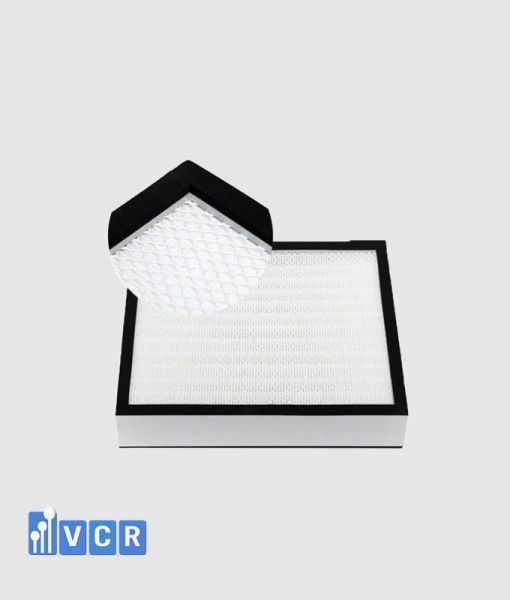
What are the advantages of mini-pleat HEPA filters in FFUs?
Mini-pleat construction provides a large filtration area within a relatively shallow filter depth. This helps optimize resistance, reduce weight, and suit FFUs with limited installation height.
Can an FFU HEPA filter be washed with water?
Normally, no. Washing or blowing a cleanroom HEPA filter may damage the filter media, alter the fibre structure, or create invisible leaks. HEPA filters should be replaced rather than washed unless the manufacturer specifically states otherwise.
FFU Airflow, Pressure, Velocity, and Noise
What is FFU airflow?
FFU airflow is the volume of air delivered by the unit over a given period. It is commonly expressed in cubic metres per hour, cubic metres per minute, or cubic feet per minute.
What is a suitable FFU outlet velocity?
Many FFUs operate at a filter-face velocity of approximately 0.3 to 0.5 m/s. The correct value depends on the application, because a direct product-protection zone may require different conditions from a general dilution cleanroom.
What is FFU static pressure?
Static pressure represents the fan’s ability to overcome resistance from the HEPA filter, protective grille, ductwork, and other airflow components. It should always be evaluated together with airflow at the actual operating point.
Is an FFU with a higher maximum pressure always better?
No. Maximum pressure is often measured at very low or zero airflow. The more important value is the available pressure when the FFU is delivering the required design airflow.
What is an FFU airflow-pressure curve?
It is a graph showing the relationship between the fan’s airflow and pressure. As system resistance increases, airflow generally decreases unless fan speed is adjusted.
Why does FFU airflow decrease after prolonged operation?
Common causes include HEPA filter loading, blocked prefilters, restricted air inlets, or reduced motor performance. Differential pressure, velocity, and electrical current should be checked to identify the cause.
What is an acceptable FFU noise level?
Many high-quality FFUs operate at approximately 50–55 dB(A) at their design point. However, the measurement distance, airflow, installation condition, and background noise must be considered.
Why does an FFU produce a humming sound?
Humming may originate from the motor, enclosure resonance, controller, or ceiling grid. It can also occur when the fan operates outside its efficient operating range.
Why does an FFU vibrate?
Vibration may be caused by an unbalanced impeller, worn bearings, loose fasteners, or a deformed enclosure. Prolonged vibration can increase noise, shorten service life, and affect filter sealing.
How can FFU system noise be reduced?
Noise can be reduced by selecting a fan at the correct operating point, lowering speed where possible, controlling vibration, and avoiding ceiling resonance. Using an appropriate number of FFUs can also reduce the load and noise generated by each unit.
FFU Energy Consumption and Operating Efficiency
How much electricity does an FFU consume?
Power consumption depends on FFU size, airflow, pressure, motor type, and operating speed. Accurate comparison requires measuring input power at the same airflow and system resistance.
How does an EC motor FFU save energy?
An EC motor offers high efficiency, especially at reduced speed. It allows the FFU to match airflow to actual demand rather than operating continuously at maximum speed.
Does reducing FFU speed significantly reduce energy consumption?
Yes. Fan power decreases rapidly as speed is reduced, so proper speed control can deliver substantial energy savings. However, speed must not be reduced to a level that compromises cleanliness or room-pressure balance.
Can some FFUs be turned off when production stops?
Selected FFUs may be slowed down or switched off in groups if the cleanroom design and procedures permit. The cleanroom recovery time must be established before production resumes.
Why does an FFU system consume more energy than expected?
Possible causes include dirty filters, excessive fan speed, poor fan selection, or unnecessarily high airflow settings. A system without demand-based control may also operate continuously at excessive power.
Does a larger FFU motor mean better performance?
Not necessarily. An oversized motor may increase energy use, noise, and cost without improving system performance. Motor capacity should match the required operating point and necessary pressure reserve.
What costs are included in the FFU lifecycle cost?
Lifecycle cost includes purchase price, electricity, filter replacement, maintenance, spare parts, downtime, and control-system costs. In large systems, electricity may represent a major part of the total ownership cost.
Can FFU efficiency be measured on site?
Airflow, velocity, electrical power, noise, and differential pressure can be measured on site. Accurate fan efficiency assessment may require specialized test equipment and controlled conditions.
How does a dirty HEPA filter affect FFU energy consumption?
As a HEPA filter becomes loaded, its resistance increases. A constant-airflow control system responds by increasing fan speed, which raises electrical power consumption.
How can an FFU system be operated efficiently?
The system should use clean prefilters, appropriate speed settings, grouped operation, and differential-pressure monitoring. Centralized controls can automatically optimize fan speed according to production demand.
FFU Ceiling-System Design
What is an FFU ceiling?
An FFU ceiling is a technical ceiling system that integrates multiple FFU modules to supply clean air uniformly into a room. It is normally coordinated with blank ceiling panels, lighting, sprinklers, and maintenance access.
What does FFU ceiling coverage mean?
FFU ceiling coverage is the proportion of the total ceiling occupied by FFU filter faces. Higher coverage can support more unidirectional airflow but also increases capital cost and energy consumption.
What is the appropriate FFU ceiling coverage?
There is no universal coverage ratio for every cleanroom. ISO Class 5 or unidirectional airflow areas usually require greater FFU coverage than ISO Class 7 or ISO Class 8 rooms.
How is an FFU different from an AHU?
An AHU controls temperature, humidity, fresh-air supply, and primary filtration. An FFU mainly recirculates local air and provides final HEPA or ULPA filtration at the point of supply.
Can an FFU completely replace an AHU?
Normally, no. An FFU cannot independently manage heat loads, humidity, or required fresh-air volume. Most cleanrooms combine FFUs with an AHU or another air-conditioning system.
How is an FFU different from a HEPA box?
An FFU includes its own fan, while a HEPA box receives pressurized air from an AHU through ductwork. FFUs are suitable for local recirculation, while HEPA boxes are commonly used in centralized air-supply systems.
When should an FFU be used instead of a HEPA box?
An FFU is suitable when modularity, high air-supply density, system expansion, or zone-level control is required. A HEPA box is suitable when the central duct system can provide sufficient airflow and pressure.
What happens if FFUs are distributed unevenly?
Poor distribution can create low-velocity zones, recirculation regions, or horizontal airflow. These conditions may increase particle accumulation and contamination-transfer risks.
Does production-equipment layout affect FFU positioning?
Yes. Machines, worktables, and personnel can obstruct airflow or create turbulence. FFUs should be positioned to protect open products and other contamination-sensitive locations.
Is CFD simulation necessary for an FFU system?
CFD simulation is useful for rooms with complex geometry, large equipment, or strict airflow requirements. It can identify dead zones, reverse airflow, turbulence, and poorly positioned return-air paths.
Industrial Applications of FFUs
How are FFUs used in electronics manufacturing?
FFUs are installed at high density to control particles over assembly lines, optical processes, and inspection areas. EC motors and centralized controls are often used to reduce energy consumption and simplify operation.
What is the role of FFUs in semiconductor facilities?
FFUs help create environments with extremely low particle concentrations and stable downward airflow. Many semiconductor areas use ULPA filters and high FFU ceiling coverage.
Are FFUs used in pharmaceutical manufacturing?
Yes. FFUs may be used in clean areas, unidirectional airflow units, sampling booths, and product-protection modules. Their application must align with room classification and contamination-risk assessment.
Can FFUs be used in operating theatres?
Yes, in some clean-air ceiling systems above the operating table. The design must be coordinated with HVAC performance, temperature, room pressure, noise, and healthcare requirements.
Are FFUs suitable for laboratories?
FFUs are suitable for laboratories requiring particle control or localized clean zones. However, they do not replace safety exhaust systems when hazardous chemicals or biological agents are handled.
Can FFUs be used in food production?
Yes. FFUs can protect open filling, packaging, and sensitive processing areas. The required level of control depends on product risk and hygiene requirements.
Are FFUs suitable for cosmetics manufacturing?
Yes. FFUs can support particle control in weighing, mixing, filling, and packaging areas. The enclosure should have cleanable surfaces and materials compatible with the operating environment.
Can FFUs be used in lithium-battery production?
Yes, but battery manufacturing may also require very low humidity. The FFU performs filtration and recirculation, while humidity must be controlled by a dedicated dehumidification system.
Are FFUs suitable for modular cleanrooms?
FFUs are particularly suitable for modular cleanrooms because they are easy to install, relocate, and expand. The system can be configured by individual room, zone, or production module.
Can an FFU be used in a laminar airflow unit?
Yes. An FFU can provide clean air for a laminar airflow booth, clean bench, or product-protection zone. Airflow direction and velocity uniformity must be verified across the working area.
FFU Operation, Maintenance, and Troubleshooting
What should be checked daily on an FFU?
Operators should check operating status, unusual noise, vibration, alarms, and abnormal airflow. In centralized systems, disconnected FFUs or units operating at incorrect speeds should also be identified.
How often should an FFU be maintained?
The maintenance frequency depends on the operating environment and working hours. A maintenance schedule should consider filter pressure drop, motor operating hours, fan condition, and manufacturer recommendations.
Does the inside of an FFU need cleaning?
The inlet chamber, protective grille, and enclosure surfaces may require cleaning if dust accumulates. Cleaning must not damage the filter, wiring, sensors, or impeller.
Should compressed air be used to clean an FFU?
Compressed air should not be directed at HEPA filters or sensitive electronic components. It can disperse contamination, damage filter media, or force dust deeper into the equipment.
How can reduced FFU airflow be detected?
Reduced airflow can be detected by measuring filter-face velocity, total airflow, or differential pressure. Other signs include longer cleanroom recovery times and increasing fan speed without achieving the required airflow.
What are the signs of a failing FFU motor?
Common warning signs include unusual noise, increased vibration, high temperature, unstable speed, and overcurrent alarms. The unit should be stopped and inspected if there is a burning smell or mechanical impact noise.
Can only the FFU motor be replaced?
Yes, if the manufacturer provides a compatible motor or fan assembly. After replacement, the rotation direction, balance, airflow, vibration, and control signals should be verified.
What precautions are required when replacing an FFU HEPA filter?
Power should be isolated, the area protected, and the filter removed according to the manufacturer’s procedure. The new filter must be installed without damaging the gasket or gel seal, followed by airflow and integrity testing.
What should be checked during FFU acceptance testing?
Acceptance testing should include appearance, materials, motor model, filter grade, airflow, velocity, noise, power consumption, controls, and sealing. Documentation should include technical data, filter certificates, and factory or site test reports.
Where can businesses purchase a reliable FFU – Fan Filter Unit?
Businesses should choose a supplier that provides technical consultation and clearly identifies the motor, filter, fan curve, and control system. Vietnam Cleanroom Equipment supplies FFU solutions for cleanroom contractors and factories, including various motor options, HEPA or ULPA filters, and centralized control systems.
Conclusion
An FFU – Fan Filter Unit is a highly modular clean-air supply and recirculation solution widely used in electronics, semiconductor, pharmaceutical, medical-device, food, cosmetics, and laboratory cleanrooms.
An effective FFU system should be selected according to airflow, pressure, filter class, motor technology, noise level, control capability, and lifecycle cost. Businesses should evaluate the complete FFU at its actual operating point rather than selecting equipment based only on purchase price or a single catalog value.