In real-world implementation, “VCR Cleanroom Equipment” has found that misunderstanding FFU fundamentals often leads to incorrect airflow design and reduced cleanroom performance.
What is an FFU (Fan Filter Unit) in a cleanroom?
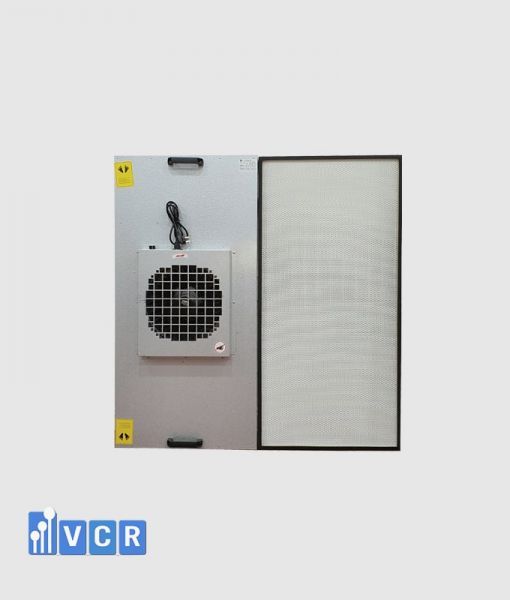
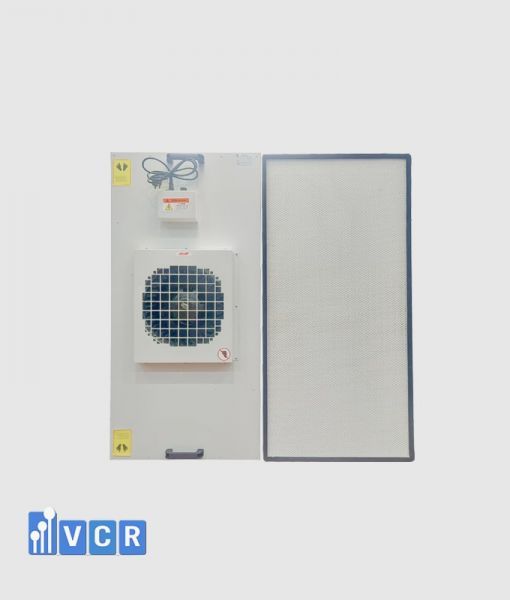
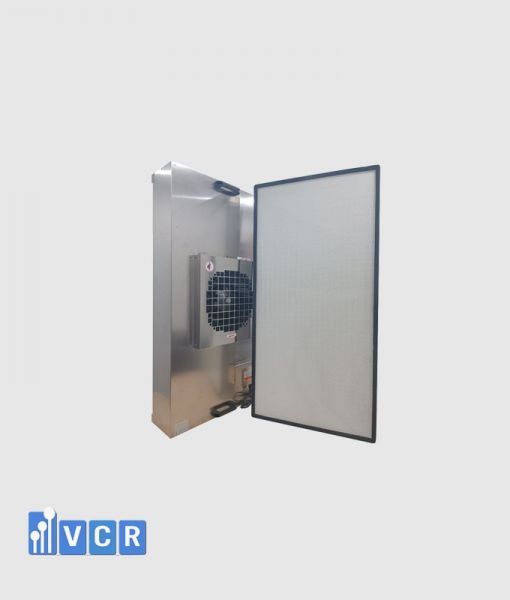
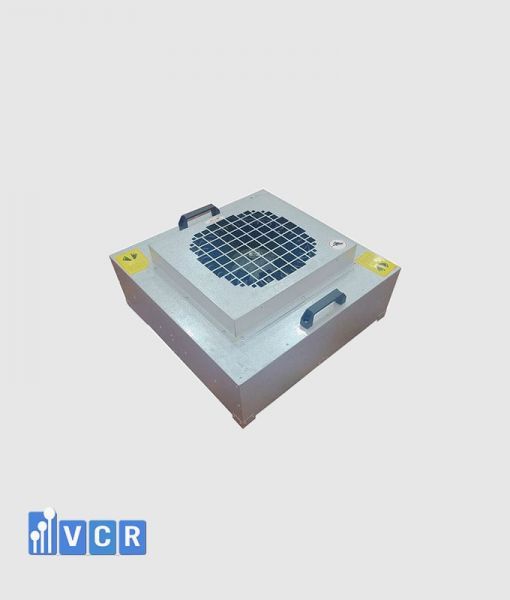
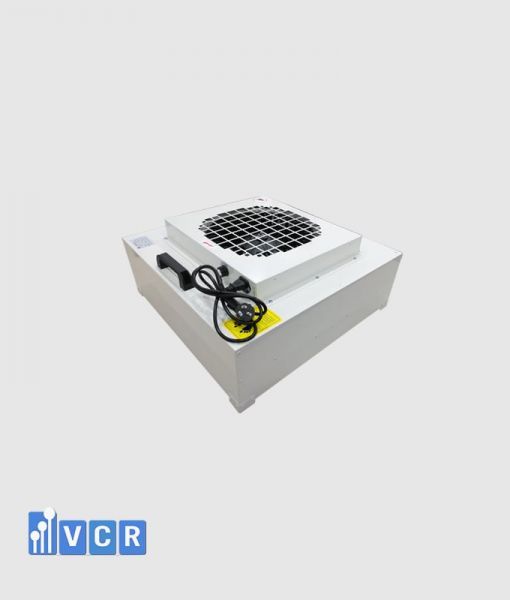
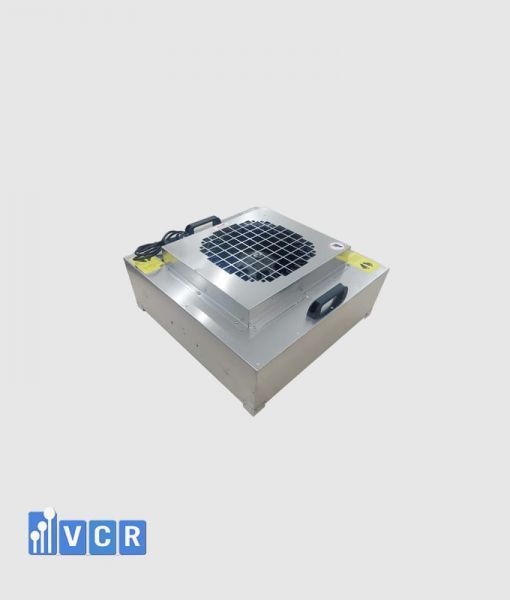
An FFU (Fan Filter Unit) is a device that integrates a fan and a HEPA or ULPA filter, typically installed on the cleanroom ceiling to supply clean air downward into the working area. Unlike centralized air systems, FFUs function as decentralized clean air sources, allowing localized control of cleanliness. The device plays a critical role in maintaining particle concentration within acceptable limits defined by ISO 14644. In modern cleanroom design, FFUs are widely used for their flexibility, scalability, and ability to provide precise environmental control.
What is the purpose of using an FFU in a cleanroom?
FFUs are used to generate and maintain a continuous supply of clean air within a controlled environment. They remove airborne particles and microorganisms, ensuring compliance with ISO and GMP standards. In addition to filtration, FFUs help create laminar airflow that minimizes turbulence and reduces the risk of cross-contamination. They are commonly installed in grid layouts across the ceiling to provide uniform air distribution and stable cleanroom conditions.
How does an FFU work?
An FFU operates by drawing air from the surrounding environment, passing it through a HEPA or ULPA filter to remove particles and contaminants. The filtered air is then pushed downward by the fan at a controlled velocity. This continuous process creates a stable and uniform airflow that maintains the desired cleanliness level. The effectiveness of an FFU depends on filter quality, fan performance, and airflow control accuracy.
What role does an FFU play in a cleanroom system?
FFUs act as direct sources of clean air supply, maintaining stable environmental conditions and supporting contamination control. They complement HVAC systems by providing localized airflow and enhancing particle removal efficiency. In many modern cleanrooms, FFUs partially replace centralized systems, offering flexibility and easier expansion. Their role is especially critical in high-class cleanrooms such as ISO Class 5 environments.
When should FFUs be used in cleanroom design?
FFUs are used when high levels of cleanliness and precise airflow control are required. They are suitable for pharmaceutical, semiconductor, electronics manufacturing, and laboratory environments. FFUs are also ideal for systems requiring flexibility, modular expansion, or retrofitting existing facilities. The decision to use FFUs depends on contamination control requirements, design standards, and operational needs.
How does an FFU differ from a traditional AHU system?
An AHU (Air Handling Unit) is a centralized system that supplies air to the entire cleanroom, while an FFU is a decentralized unit installed directly on the ceiling. FFUs provide localized control, easier scalability, and simpler maintenance. AHUs, on the other hand, are better suited for large centralized systems. In many designs, both systems are combined to achieve optimal performance.
Can FFUs create laminar airflow?
Yes, FFUs can generate laminar airflow when properly designed and installed. Laminar airflow reduces air turbulence and minimizes cross-contamination risks. This is essential in applications requiring high cleanliness, such as sterile pharmaceutical production or semiconductor manufacturing.
What type of filters are used in FFUs?
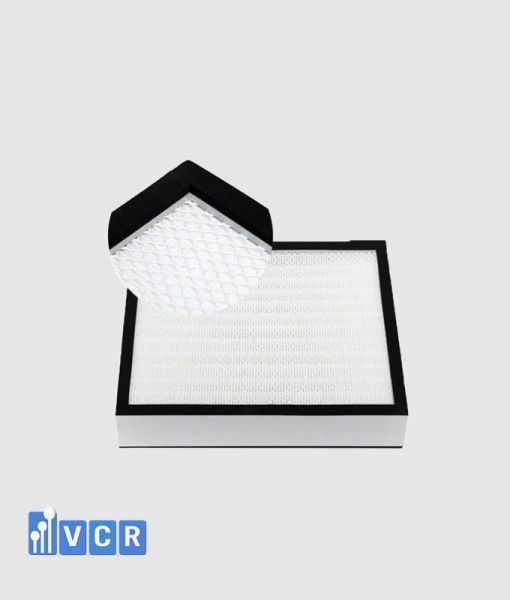
FFUs typically use HEPA or ULPA filters depending on the required cleanliness level. HEPA filters provide high efficiency for particles ≥0.3 microns, while ULPA filters offer even higher filtration efficiency for ultra-clean applications. The choice depends on ISO or GMP requirements.
Can FFUs adjust airflow and fan speed?
Modern FFUs allow adjustment of fan speed and airflow through control systems. This enables optimization of performance and energy efficiency while maintaining required cleanroom conditions.
Do FFUs need to run continuously?
In most applications, FFUs operate continuously to maintain stable cleanliness levels. Turning them off can increase particle concentration and compromise cleanroom performance. However, some systems allow controlled operation modes for energy savings.
Do FFUs affect cleanroom pressure?
FFUs can influence pressure balance if not properly designed in coordination with HVAC systems. When correctly integrated, they help maintain stable pressure differentials and support contamination control strategies.
Are FFUs used in pharmaceutical cleanrooms?
Yes, FFUs are widely used in pharmaceutical cleanrooms, especially in areas requiring sterile or high microbial control. They support compliance with GMP and ISO standards.
Are FFUs used in the electronics industry?
Yes, FFUs are essential in electronics and semiconductor manufacturing, where even microscopic particles can damage sensitive components. They ensure ultra-clean environments required for production.
Are FFUs used in laboratories?
FFUs are commonly used in laboratories to maintain controlled environments for research and testing. They help ensure accuracy and prevent contamination.
Do FFUs require regular maintenance?
Yes, FFUs require periodic maintenance to ensure optimal performance. This includes checking fans, filters, and control systems. Regular maintenance ensures reliability and compliance.
Do FFUs consume a lot of energy?
Energy consumption depends on unit size, fan power, and system design. However, modern FFUs are designed to be energy-efficient and can be optimized through speed control systems.
Can FFUs operate independently?
FFUs can operate independently or as part of a larger HVAC system. This flexibility allows for various cleanroom design approaches.
Are FFUs easy to expand in a system?
Yes, FFUs are highly modular and can be easily expanded by adding more units to the ceiling grid. This makes them ideal for scalable cleanroom designs.
Are FFUs suitable for ISO Class 5 cleanrooms?
Yes, FFUs are commonly used in ISO Class 5 cleanrooms when properly designed with the correct airflow and filter configuration.
Are FFUs mandatory in cleanroom systems?
FFUs are not always mandatory, but they are often the most efficient and flexible solution for modern cleanroom applications requiring precise environmental control.
Duong VCR